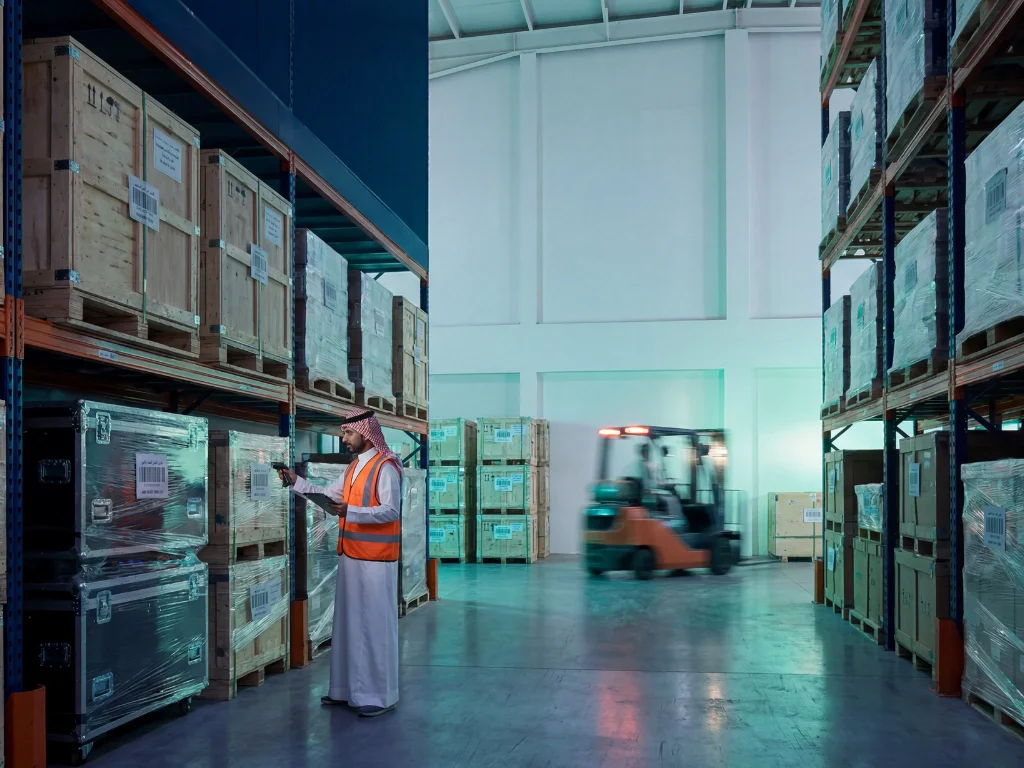

The challenge: Fragmented systems and manual coordination
Despite years of digitization, logistics is still one of the most fragmented, manual-heavy industries. Operations rely on spreadsheets, disconnected platforms, and constant Email & WhatsApp coordination while customers expect real-time service and seamless delivery.
As supply chains grow more complex, execution gets harder and slower. Most existing logistics tools weren’t built for speed, scale, or intelligence.
Generative AI has the potential to change that.
Our exploration: Embedding GenAI into core logistics workflows
At Sirdab, we’re actively exploring how to apply GenAI across five core areas to unlock real operational impact:
1. AI-powered interfaces for drivers and partners
We’re exploring how drivers and warehouse partners could manage their workflows, from accepting shipments to submitting documents, entirely via WhatsApp or other similar interfaces. With a GenAI layer, this interface could feel human, be multilingual, and work at scale. GenAI could enable:
- Accepting or confirming deals or trips
- Requesting invoices or instructions
- Getting live updates in natural language
No apps. No training. A more natural way to operate at scale.
2. AI-driven customer support
We’re also looking at how GenAI could power real-time, contextual customer support, helping partners and clients get instant answers and resolve issues without needing human intervention:
- "Where’s my shipment?" → Live ETA pulled from the system
- "What’s my current stock level?" → Real-time inventory lookup
- "Can I cancel this order?" → Automated eligibility checks
Scaling our support while improving speed and consistency.
3. Automated content and document generation
Logistics runs on documents, from SKUs to reports to SOPs. We’re evaluating how GenAI could automate:
- Product descriptions and inventory summaries
- Shipment reports and daily logs
- Internal documentation and partner onboarding kits
Freeing up teams from repetitive tasks to focus on execution.
4. Smarter data entry and document processing
Data entry is one of the biggest hidden costs in logistics. We’re exploring how GenAI could interpret unstructured inputs, PDFs, WhatsApp messages, voice notes, and automatically:
- Populate delivery logs and inbound reports
- Extract PO numbers and shipment IDs
- Flag missing or inconsistent data in real time
Higher data quality, less back-office load.
5. Predictive Operations & Analytics
We’re exploring how GenAI combined with traditional ML models can bring more intelligence into planning and exception handling:
- Forecasting delays or SLA breaches before they happen
- Auto-escalate exceptions to the right teams with full operational context
- Enriching operational data, for example, classifying SKUs with messy or multilingual names (Arabic, brand variations, etc.) to improve inventory accuracy and downstream reporting
Combining real-time signals with GenAI enables predictive, adaptive operations.
Why this matters for the Industry:
Generative AI is often associated with content creation and chatbots, but in logistics, it could become the connective tissue accross teams, tools, and data.
At Sirdab, we’re not just observing, we’re actively exploring how GenAI can help us build a more intelligent, scalable logistics platform for the region, one that simplifies operations, empowers partners, and delivers better outcomes for everyone across the supply chain.
Are you building or experimenting with GenAI in logistics? We’d love to connect and learn together. At Sirdab, we’re always exploring what’s next.
 (1).webp)