Every Saudi Founder Hits This Question Eventually
Sooner or later, every business owner in Saudi Arabia asks the same question:
"Do I keep running my own warehouse and trucks or should I just pay someone else to handle the whole thing?"
If you're reading this, you're probably hitting that moment right now.
Maybe Ramadan broke your in-house team again. Maybe you just opened in Jeddah and your CFO went pale when you priced a second warehouse. Maybe you're the founder who's still personally answering "where's my order?" messages at 11 PM.
This article won't dump a hundred logistics terms on you. It'll show you exactly what 2PL and 3PL mean, what they cost in real SAR, when each one wins, and a third option most founders haven't heard of yet.
The 30-second TL;DR
- 2PL = you own your trucks and warehouse, you run the show. Full control. High fixed costs.
- 3PL = you outsource storage + fulfillment + delivery to a specialist. You pay per use. They run the operation.
- The switch usually happens between 80 and 120 orders per day. That's where the math flips.
- There's now a third option cloud warehousing that solves the rigidity of both. We'll get to it.
What is 2PL, Really?
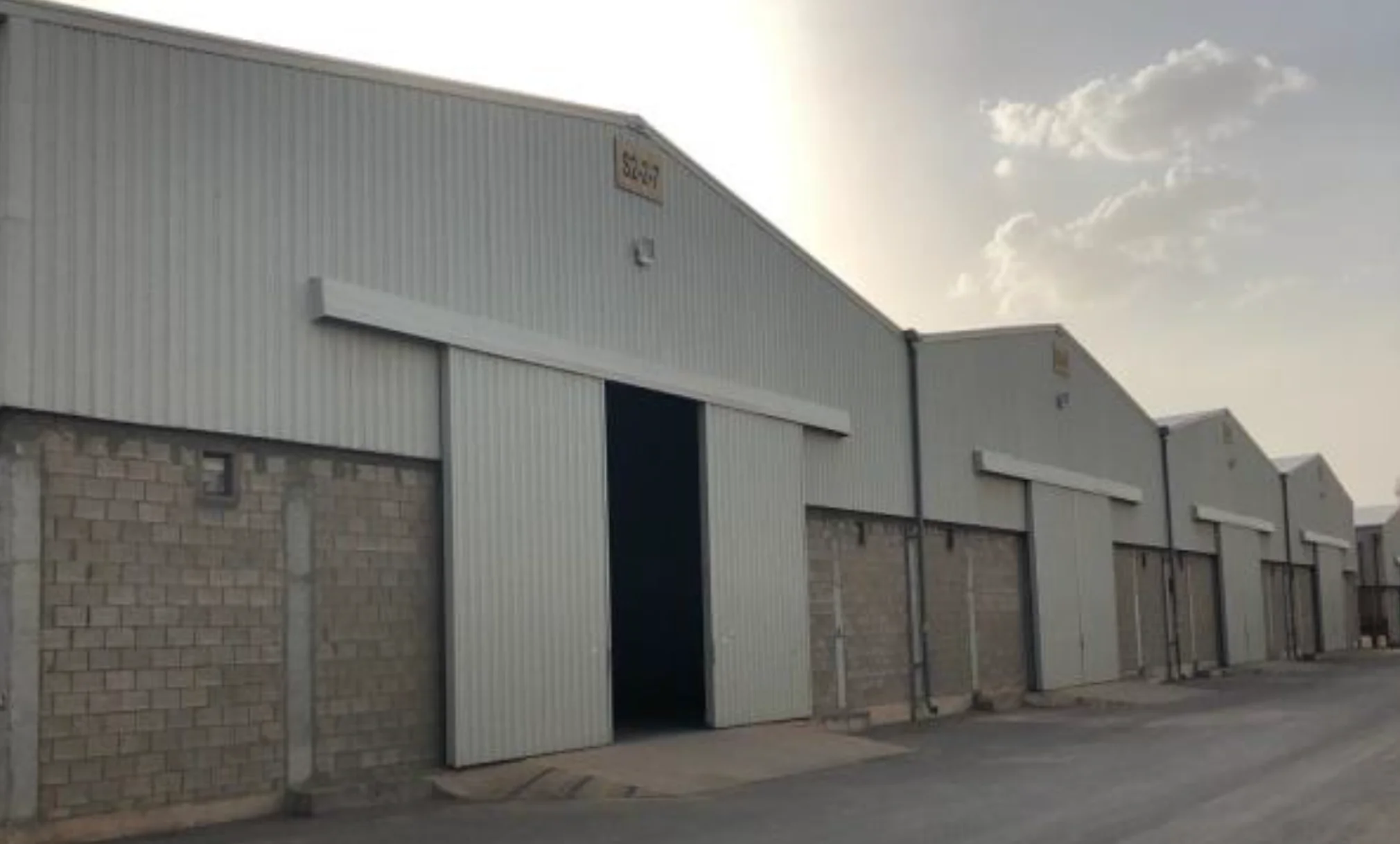
2PL stands for Second-Party Logistics. The short version: you own your logistics stack.
You lease the warehouse. You hire the team. You buy the trucks. You install the software. When something breaks, your phone rings.
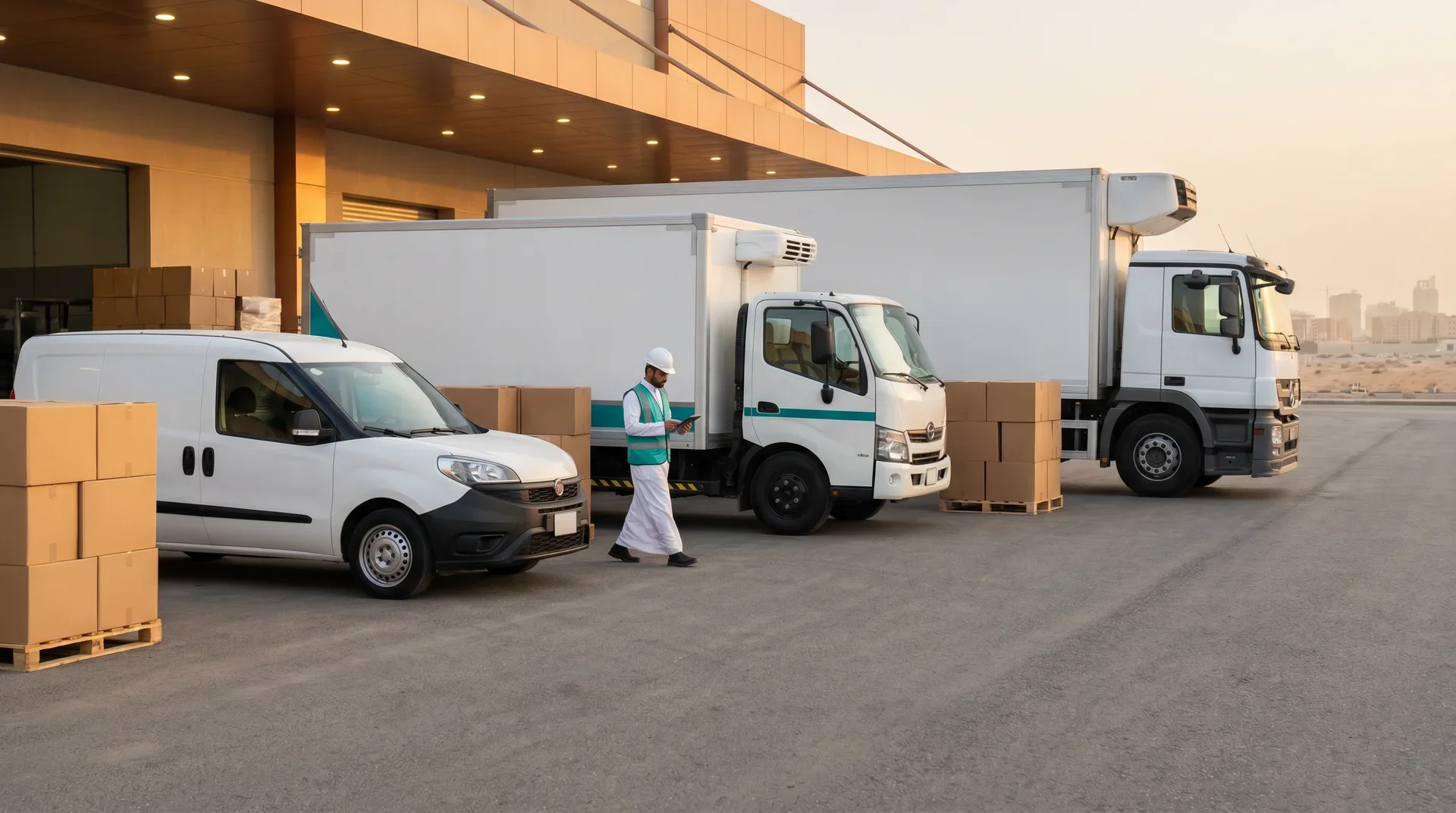
Picture this: A dates exporter in Al-Qassim with their own 3,000 sqm warehouse, their own fleet of refrigerated trucks running to Riyadh and Jeddah, and a team of 14 staff. That's 2PL. They control every step from harvest to delivery. They also pay for every empty truck and idle pallet in the off-season.
2PL isn't bad. For some businesses it's the right answer. Manufacturers with predictable volume, exporters with specialized handling needs, businesses moving the same product through the same lane every day they often do better in-house.
The problem starts when your business is growing fast, when demand swings wildly, or when you're sinking management hours into shipping instead of selling.
When 2PL still makes sense
- You ship the same product, the same route, the same volume, every month
- Your product needs unusual handling (extreme cold chain, hazardous, sensitive)
- You have the capital sitting there and want full operational control
- Your brand experience depends on owning the last mile (luxury, white-glove)
What is 3PL, Really?
3PL stands for Third-Party Logistics. Simple version: you hand the keys to someone whose entire business is logistics.
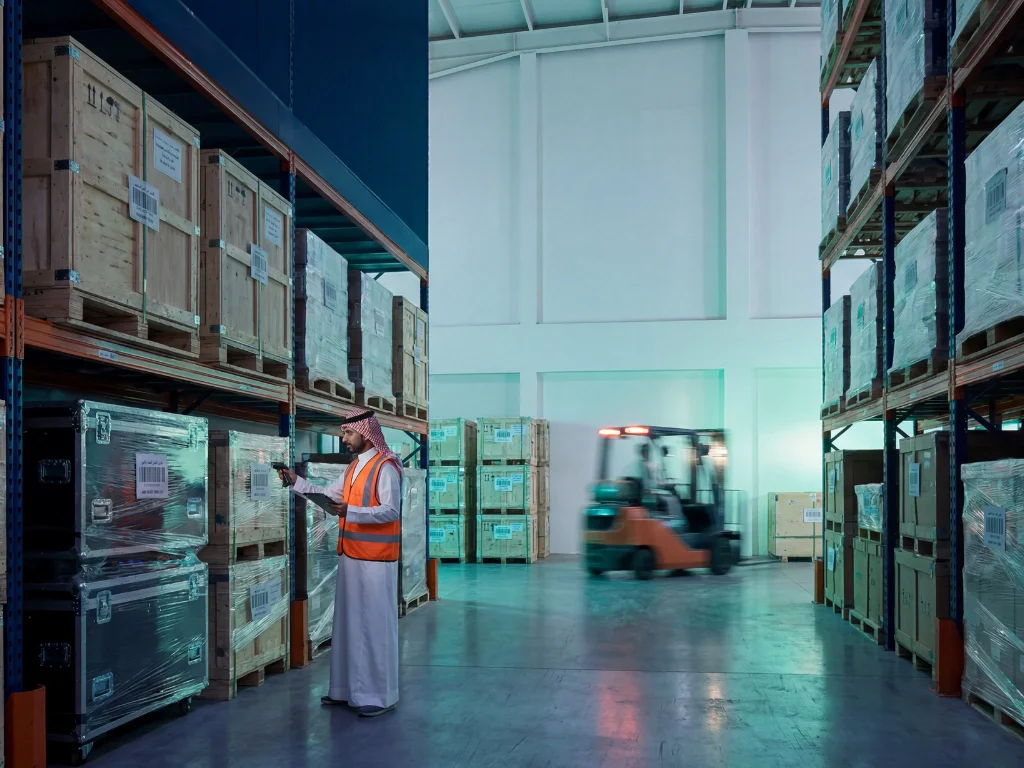
They store your stock. They pick it. They pack it. They deliver it. They process returns. You see everything in a dashboard. You pay per order, per pallet, per shipment not for empty space.
Picture this: A perfume brand in Riyadh selling on Salla, doing 2,800 orders a month. Instead of renting a warehouse and hiring pickers, they ship their stock to a 3PL. The 3PL receives it, lists it in their system, and from that moment every Salla order auto-flows to them. The founder hasn't touched a packing tape gun in six months. She's focused on launching her second product line.
3PL providers in Saudi Arabia range from the big international names (DHL, Aramex) to specialist Saudi operators built specifically for e-commerce (cloud warehouses, Salla-native 3PLs, multi-city networks).
What 3PLs actually do for you
- Storage: your stock sits in their warehouse on their racks
- Receiving: when your supplier ships in, they unload, count, and shelve
- Pick and pack: each customer order gets pulled from the shelf, packed, labeled
- Last-mile delivery: they hand off to their delivery fleet or carrier network
- Returns: when customers return, the 3PL processes, restocks, or refunds
- Technology: real-time inventory, dashboards, integration with Salla, Zid, Shopify
The Real Cost: What This Actually Looks Like in SAR
Most articles dance around the cost question. We won't.
Here's a real example directional numbers, but built from current Saudi market ranges (your exact quote will vary).
The 2PL setup a mid-size Riyadh business
Imagine you're running a 2,000 sqm warehouse in Riyadh with 10 delivery vehicles. Annual costs look something like:
- Warehouse rent SAR 300,000 to 400,000
- Racks, fit-out, and equipment (annualized) SAR 80,000 to 120,000
- Staff (8 to 12 people) SAR 480,000 to 720,000
- Trucks (fuel, maintenance, depreciation) SAR 350,000 to 550,000
- WMS software and IT SAR 60,000 to 120,000
- Insurance, compliance, overhead SAR 80,000 to 150,000
Annual total: roughly SAR 1.35M to SAR 2.06M.
That's before you count the cost of your team being stretched, vacancy during slow months, or what you're not doing with that capital.
The 3PL setup same business, outsourced
Now imagine the same business ships ~5,000 orders a month through a 3PL:
- Storage (equivalent space, shared rates) SAR 180,000 to 280,000/year
- Pick and pack SAR 8 to 18 per order
- Last-mile delivery SAR 15 to 35 per shipment
- Platform and integration SAR 24,000 to 60,000/year
Annual total: roughly SAR 900,000 to SAR 1.5M and it scales with your volume, not as a fixed burden.
The hidden costs nobody mentions
If you only compare visible costs, the math lies to you. Here's what most founders miss:
- Empty months hurt 2PL. Your warehouse rent and salaries don't drop when Ramadan ends and orders crash.
- Tech upgrades. A WMS needs major upgrades every 4-6 years. Add SAR 200,000+ to your real cost.
- Hiring churn. Logistics turnover in the GCC sits around 22-35% a year. Every hire, training round, and offboarding bleeds time and money.
- Compliance updates. ZATCA, customs, Saudization
- the rules change. A good 3PL absorbs that headache. A 2PL operation eats it.
Rule of thumb: most mid-market businesses doing the comparison discover their real 2PL cost is 15-40% higher than they thought once hidden costs are included.
5 Signs It's Time to Switch From 2PL to 3PL
You don't switch because of a single quarter. You switch when the signals pile up. Here are the five most common ones we see in the Saudi market.
1. Your peak season breaks your team every year
Ramadan, Eid, White Friday, Saudi National Day peak volume is 3-5x your average. If your in-house team is collapsing every peak, you're losing customers exactly when you should be winning them.
2. You're expanding city by city
Adding Jeddah after Riyadh requires either a second warehouse (and second team) or a 3PL with a network already in place. The math for self-built multi-city is brutal until you're shipping 8,000-10,000 orders a month per city.
3. Order errors are creeping up
If your fulfillment error rate is above 2%, you're losing repeat customers faster than you're acquiring new ones. Specialist 3PLs operate at 99.5%+ accuracy because that's their entire business.
4. Your operations director isn't doing operations
If your top ops person is spending more than 30% of their week dealing with shipping fires, you're paying senior salary for warehouse-floor problems. That's expensive in two directions.
5. You're spending more than 15% of revenue on logistics
Logistics shouldn't eat that much. If it is, your fixed costs are wrong for your scale. A 3PL converts those fixed costs into variable ones.
The Saudi-Specific Stuff Nobody Else Talks About
Generic 3PL articles ignore four things that matter enormously here.
ZATCA Phase 2 e-invoicing
Every line item your 3PL bills you for has to be ZATCA-compliant, with the right QR code and integration. A 3PL that doesn't have this dialed in will create accounting headaches you'll feel monthly. Before you sign anything, ask: "Show me your ZATCA Phase 2 setup."
The Salla / Zid reality
Around 70% of Saudi e-commerce runs on Salla or Zid. If your 3PL doesn't have a native, real-time integration with the platform you're on not a manual upload, not a daily sync, a real API connection your inventory will eventually drift. Stockouts. Oversells. Refund chaos.
Vision 2030 and the logistics infrastructure boom
The Riyadh Integrated Logistics Special Zone (ILSZ), King Abdullah Port expansion, the national rail network these aren't headlines, they're cost advantages. 3PLs operating inside these zones get faster customs, cheaper inland transport, and shorter lead times. Ask any 3PL where their warehouses sit on the new logistics map.
Saudization (Nitaqat)
If you run your own warehouse, you carry the full Saudization burden alone. A 3PL spreads that compliance across their whole client base making it cheaper, easier, and less risky.
The Third Option Most Founders Haven't Heard Of: Cloud Warehousing
Here's the part most "2PL vs 3PL" articles miss entirely.
Over the last few years, a third model has emerged in Saudi Arabia. It looks like 3PL but works differently. It's called cloud warehousing.
Think of it like AWS but for your inventory.
How cloud warehousing is different from a traditional 3PL
- No long contracts. Start in 7-14 days. Stop whenever. No annual commitments.
- No minimum pallets. Store 5 pallets or 5,000 you pay only for what you use.
- Multi-city by default. Spread your inventory across Riyadh, Jeddah, Dammam without negotiating separate warehouse contracts.
- API-first. Salla, Zid, Shopify integrations are native, not bolted on.
- Real-time inventory. See your stock, orders, and delivery status on one dashboard.
Who cloud warehousing actually fits
- E-commerce businesses doing 500 to 50,000 orders a month
- Brands launching in Saudi without wanting to commit capital
- Established businesses dealing with seasonal swings (Ramadan, Eid, school season)
- Brands wanting same-day delivery in Riyadh, Jeddah, and Dammam without running three warehouses
If 2PL feels too heavy and a traditional long-contract 3PL feels too rigid, cloud warehousing is usually the answer.
How to Pick the Right 3PL (or Cloud Warehouse) in Saudi Arabia
Once you've decided to outsource, picking the right partner matters more than the decision itself. Bad 3PL is worse than no 3PL.
The 8 questions to ask before you sign anything
- What cities do you cover, and how many warehouses do you operate? Single-city is rarely enough.
- Show me your Salla / Zid / Shopify integration in action. Not a slide a live demo with real orders flowing.
- What's your order accuracy rate? Anything below 99% is a red flag.
- How do you handle Ramadan and peak season capacity? Ask for the playbook, not the promise.
- How do you handle returns? COD return rates in Saudi sit around 15-25%. Make sure they have a real process.
- Are you ZATCA Phase 2 compliant? Get the answer in writing.
- What's your contract length and exit policy? Avoid 2-year locks if you can.
- Who's my account manager and how often do we talk? Service quality lives or dies here.
FAQs Founders Actually Ask
What's the simplest way to explain 2PL vs 3PL?
2PL = you run your own warehouse and trucks. 3PL = someone else runs them, and you pay per order. That's it.
Is 3PL always cheaper than running it yourself?
No. At very high, very stable volumes, in-house can be cheaper per unit. But for most growing businesses in Saudi, once hidden costs are counted, 3PL wins on total cost.
When does the math flip from 2PL to 3PL?
Roughly between 80 and 120 orders per day. Below that, 3PL is almost always the better call. Above 15,000-20,000 shipments per month per region with stable demand, owning in-house can start winning again.
What does a 3PL actually cost in Saudi Arabia?
Storage runs SAR 25-50 per pallet per month. Pick and pack runs SAR 8-18 per order. Last-mile delivery runs SAR 15-35 per shipment. Add account management and integration fees. Get a quote never trust a generic number.
How long does the switch take?
A traditional 3PL takes 6-12 weeks to fully onboard. A cloud warehouse can have you live in 7-14 days for e-commerce setups.
Can I keep some logistics in-house and outsource the rest?
Yes that's called a hybrid model and lots of Saudi enterprises do it. You can keep your high-value or specialized lanes in-house and let a 3PL handle the rest.
Will I lose control if I outsource?
You lose direct control, but you gain SLA-based control. Good 3PLs publish their accuracy, on-time, and damage rates monthly. The right contract makes performance enforceable.
What's cloud warehousing in one sentence?
Cloud warehousing is on-demand storage and fulfillment pay only for what you use, no contracts, no minimums, real-time dashboards, multi-city by default.
Does ZATCA affect this decision?
Yes. Every invoice from your 3PL needs to be ZATCA Phase 2 compliant. Confirm it before signing. Some older 3PLs are behind on this and it'll create accounting pain.
What's the single biggest mistake founders make here?
Choosing on storage price alone. Storage is rarely the biggest cost. The pick-and-pack fee, the last-mile rate, and the returns fee usually decide your total bill. Optimize for the bundle, not the line.
The Bottom Line
If your business has stable, predictable, high volume and you have capital sitting on the balance sheet, 2PL can work.
For everyone else every growing e-commerce brand, every business expanding across Saudi cities, every operator who's tired of being the warehouse manager instead of the founder 3PL or cloud warehousing wins.
The honest version: your competitors who switched aren't doing it for fun. They're doing it because logistics is a specialist game now, and trying to be excellent at both your product and your warehouse rarely ends well.
If you want a 20-minute conversation with someone who runs logistics for hundreds of Saudi brands not a sales pitch, just a real look at your numbers talk to a Sirdab specialist. We'll tell you honestly whether 2PL, 3PL, or cloud warehousing fits your business right now.
 (1).webp)